
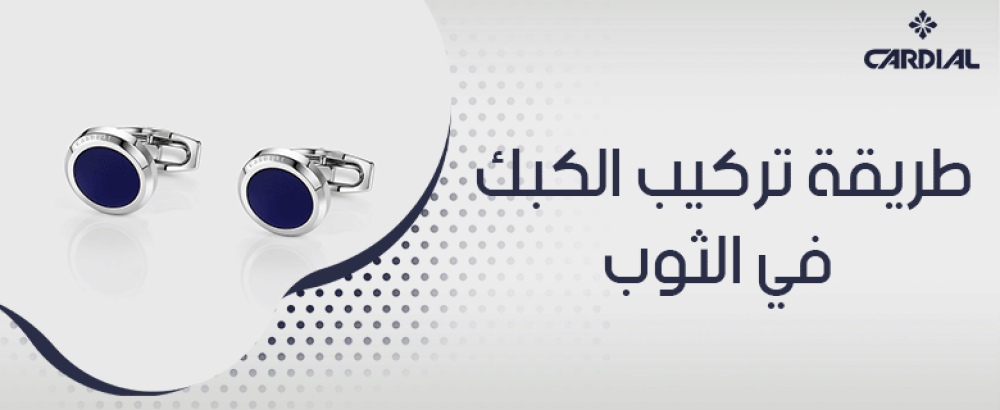
It's common to confuse a sleeve with a traditional button with one specifically designed to accommodate cufflinks, leading some to attempt to insert cufflinks into openings not designed for them. This confusion can stretch the fabric or distort the sleeve's appearance instead of adding an elegant touch. The proper way to attach cufflinks to a garment depends primarily on the sleeve design. If there are two opposing openings specifically designed for this purpose, they are aligned, and the cufflink stem is then threaded through them. The mechanism is then closed according to the cuff's design, so that the decorative front is visible on the outside and the back is gently closed without putting pressure on the fabric. The following steps provide a quick and practical method for correctly attaching and removing cufflinks.
How to attach cufflinks to a garment step by step?
The cufflinks are attached to the garment in four consecutive steps: checking the sleeve opening, folding the sleeve and aligning the openings, threading the leg through and closing it, and then checking for secure fastening. Following this sequence preserves the fabric and ensures the cufflinks are properly attached.
Check the cuff opening and prepare the cufflinks
The fitting begins by checking the sleeve end to ensure there are opposing eyelets on both sides of the fabric, and that there isn't a button sewn on one side and a regular buttonhole on the other. It's advisable to check the back of the cuff beforehand to determine the fastening mechanism before threading it through the fabric.
Fold the sleeve and align the openings
- Leaving the end of the sleeve open is the case with French sleeves.
- Fold the sleeve back along the natural crease line.
- Rounding the edges of the sleeve in a level manner without irregular overlap.
- Match the opposing holes before inserting the cufflinks.
Pass the cufflink stem and close it
- Direct the decorative face of the cufflink outwards from the sleeve, on the side that appears when the hand hangs naturally.
- Pass the leg gently through the opposite openings, usually from the outside in, without twisting or forcing it.
- Align the movable tongue with the leg during insertion, if present, then rotate it to the transverse position after it has passed through the fabric.
- The hinge is closed according to its design, while the chain cufflink has one end passed through the openings while the chain remains between the two sides of the sleeve.
Check the stability and gently unbuckle the cuff
After installation, it is advisable to ensure the front is securely attached outside the sleeve, the clasp is level behind it, and the fabric is evenly aligned. A natural wrist movement helps to check that the cufflink does not slip, while avoiding pulling it forcefully.
To remove a cufflink with a movable tab, return the tab to the inserted position and then gently pull the cufflink out. Avoid pulling or twisting the fabric, as direct pulling may widen the openings or tear the fabric around them.
Are cufflinks suitable for all sleeves of a dress?
Cufflinks are not suitable for every sleeve design. Their fit depends on having opposing openings at the sleeve end that allow the cuff to pass through the sides of the fabric; a single buttonhole is not sufficient. Checking the sleeve design before purchasing is a crucial step in ensuring proper cufflink placement to avoid any mismatch.
French double-layered sleeve
This sleeve is folded back before the ends are brought together, and it has opposing openings typically designed for cufflinks. This type is the closest and most convenient design for using cufflinks directly.
Convertible quantity
This sleeve can be closed with a button or a cufflink, provided it has an additional slot for the cufflink alongside the original button. Aligning the opposing slots and then threading the cufflink through them, according to the sleeve's design, is necessary.
Traditional single-button sleeve
The traditional barrel cuff fastens with a button embedded in the fabric, and this type is not the standard choice for cufflinks unless it is also designed with appropriate buttonholes. The presence of a button and a regular buttonhole on the cuff does not, in itself, mean it can be converted into cufflinks.
The sleeve designs of dresses vary from piece to piece, so it is advisable to check the sleeve openings directly rather than assuming that the cuffs will automatically fit every dress.
Types of cuff mechanisms and methods of closing them
The mechanisms of the cufflinks branch out into different forms in terms of the method of fixing behind the fabric, and knowing the shape of the back before starting with the method of fixing the cufflinks to the garment is necessary to avoid the mistake, as not all cufflinks open or close in the same way.
The movable tongue cuckoo
This type features a tab that is parallel to the shank when inserted into the holes, allowing it to glide smoothly through the fabric. After passing through, the tab is rotated to a transverse position behind the fabric, acting as a barrier to prevent it from shifting and to secure the cuff in place.
hinged closure cuff
In this type, the fastening relies on a rear section connected to a hinged opening and closing mechanism. This section opens first to facilitate the passage of the cufflink through the slots, then closes after installation to securely hold the cufflink in place.
Chain cufflinks and fixed back
In a chain cuff, one end passes through the eyelets while the chain remains attached between the two sides of the cuff; this mechanism holds the two pieces together. A fixed-back cuff, however, operates differently, as it does not require any back mechanism to be rotated, unlike a movable tab cuff.
A specific fastening mechanism is not attributed to any cufflink unless this information is clearly stated in its specifications. Sometimes, the mechanism of a metal lever that opens and closes can be described without being called a swivel tongue or hinge, depending on the actual shape of the piece.
Cufflink fitting mistakes that may damage the sleeve
Making some common mistakes when attaching cufflinks can cause damage to the fabric or difficulty in use, and knowing them helps to preserve the sleeve and the cufflink itself for a longer period.
Failure to check the alignment of the openings
A common mistake is threading the cuff through the sleeve before ensuring that its side openings are perfectly aligned. Incorrect alignment makes it difficult to insert the cuff link and also causes uneven pressure on the fabric, which can leave a noticeable mark over time.
Forcing the leg of the cufflink or stretching the fabric
If there is resistance during installation, it is not recommended to force the cuff link through the opening, nor to roll the fabric around it to facilitate insertion. It is best to check the type of sleeve and readjust its openings rather than applying more pressure.
Also, when removing the cuff, it is best to avoid pulling it directly off the sleeve. Returning the closure mechanism to the inserted position first, then gently removing it, reduces the likelihood of stretching the openings or tearing the surrounding fabric.
Leaving the lock tilted or too tight
Excessive resistance during fastening does not necessarily mean the cuff is better secured. Ideally, the clasp should rest behind the cuff without any tilt or twist, with the fabric gently draped around it. This ensures a proper fit that maintains the cuff's shape and integrity.
Criteria for choosing the right cufflinks for a dress
Choosing the right cufflinks depends on three main factors: their compatibility with the sleeve openings, the ease of their fastening mechanism, and the harmony of their shape and color with the desired look. Adhering to these criteria ensures the cufflinks are properly fitted to the garment and create a polished appearance.
The cufflinks are compatible with the sleeve structure.
The presence of opposing cufflink slots is the first criterion to consider when choosing a cuff. Not just any cufflink will fit a traditional buttoned sleeve; only cufflink-specific sleeves (also known as convertible sleeves) allow for proper use. The sleeve's fit is determined by examining its slots before selecting the appropriate cufflink.
The locking mechanism is suitable for the method of use.
It's advisable to check the cufflink's back design and how it opens and closes before purchasing. Men's cufflink mechanisms vary, and it's recommended to choose one that can be slipped through the cuff openings and closed without pulling or pressing the fabric, ensuring comfort for everyday use.
Choosing the shape and color for the look
The cufflink's design and color are chosen to complement the overall look, whether formal or casual. A variety of colors are available, including silver, black, gold, and copper, as well as shades of navy and green, allowing for the selection of cufflinks suitable for any occasion and personal taste.
Selected products from Cardial
Cardial offers a selection of men's cufflinks that combine elegance and quality, with options to suit various tastes and both formal and casual looks. Two cufflink models are currently available at Cardial, ideal for those looking to learn how to attach cufflinks to a suit with details suitable for shirt sleeves.
Cardial Cupboard 265141
Cardial 265141 cufflinks are a pair of men’s cufflinks with a cylindrical design that combines a smooth center section with grooved accents, made of stainless steel.
- Closing mechanism: A metal arm that opens and closes, easily attaching to shirt sleeves.
- Surface: Polished with a clear sheen that adds an elegant detail to the look.
- Available colors: Silver, Black, Gold, Copper.
Cardial Cupboard 265223
Cardial 265223 cufflinks with a simple round design, a polished silver metal frame made of stainless steel, and a colored front that matches the cufflink back buttons.
- Closure mechanism: Easy to install and remove, suitable for shirt sleeves designed for this type of button.
- Available colors for the facade: navy, black, green.
- Design: A polished silver frame adds a touch of understated elegance to the overall look.
Frequently asked questions about how to attach cufflinks to a garment
Are cufflinks suitable for all sleeves of a dress?
The cufflink is not suitable for all types of sleeves, as it requires specific opposing eyelets for attachment. It can also be used with a convertible sleeve that includes a suitable eyelet. Without these eyelets, the cufflink cannot be properly attached.
Which side of the cufflinks is visible from?
The decorative front of the cuff is visible outside the sleeve, adding a touch of elegance to the overall look. The back of the cuff is concealed within the sleeve, maintaining the garment's sophisticated appearance.
How does a cufflink with a movable tab close?
The movable tab is threaded along its stem during installation. The tab is then rotated to the horizontal position behind the fabric to complete the fastening process. This step ensures the cuff remains securely in place throughout its use.
The proper way to attach cufflinks to a garment involves first ensuring the sleeve fits correctly and its openings are precisely aligned. Then, gently slide the cuff link through and fasten its mechanism according to its design, whether it's a snap, chain, or hinged type. When removing the cufflinks, it's best to follow the same steps in reverse, without pulling the fabric forcefully, to preserve the sleeve's integrity and shape. These steps form the basis of correct fastening, ensuring a stylish and comfortable look.